
iLORA technology · Research concept
A familiar voice.
An understandable description.
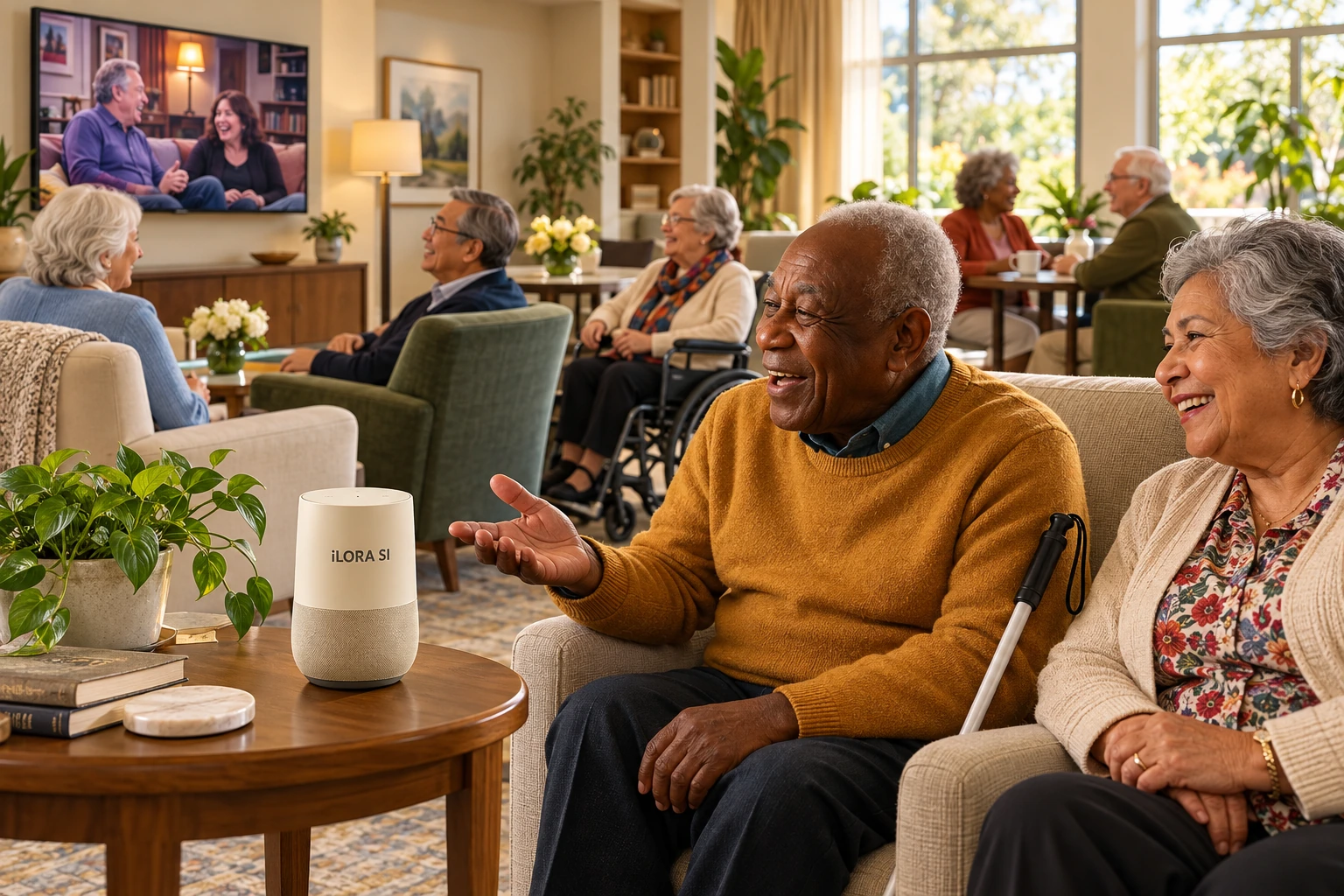
The iLORA speaker concept explores a portable, accessible interface to the wider iLORA SI vision, including requested descriptions of television scenes, rooms, and everyday information.
Research conceptHow this serves the mission
A familiar voice. An understandable description.
A suitable interface could provide a chosen explanation in context, offer repetition or clarification, and keep the user in control of whether sensing is active.

The problem
Why this matters.
Visual information in a room, on a television, or on an everyday display is not equally accessible to everyone.
Who is affected
People at the center.
Blind and low-vision people, older adults, people with different reading or motor needs, and the supporters they choose.
The proposed response
Develop and evaluate an accessible portable narration interface.
A suitable interface could provide a chosen explanation in context, offer repetition or clarification, and keep the user in control of whether sensing is active.
The speaker and iLORA SI
The speaker is a proposed physical interface. iLORA SI is the longer-term intelligent technology direction, and ALARIS is an assistant concept. Their relationship is a design intention; no integrated commercial system or achieved superintelligence is claimed.
Television and room descriptions
The intended interaction is a direct request followed by a concise, qualified description. Examples include what is occurring in a television scene, visible seating arrangements, or an uncertain count of visible people. Answers would require evidence, privacy controls, and evaluation before anyone relies on them.
Controls people can find and understand
Earlier speaker studies explored the Harbor and portable narration-console direction. Proposed exterior features include tactile controls, a raised front rail, a camera privacy shutter, microphone controls, and readable or tactile labeling. Braille, control placement, and audio cues require specialist review with users; the illustration is not a validated interface.
From room to room
Portability could support different everyday tasks, such as reading chosen printed information or understanding a display. Power, connectivity, accessible setup, supported content, and performance in real lighting and noise remain open engineering questions.
What remains to be proven
No sensing accuracy, reliable people counting, appliance control, private processing, clinical use, or emergency capability is established. Camera and microphone use is not enabled on this website. A future device must make its limitations and off controls clear.
What a person could ask
Support begins with their question.
Illustrative requests only. No microphone, camera, or assistant is active on this page.
Television
“Describe what is happening on the television.”
A proposed narration could explain visible action in context, with understandable limits and controls to pause or repeat.
The shared room
“How many people can you see, and where are they sitting?”
A proposed response would state uncertainty and the limits of the camera view. It would not establish identity or a complete headcount.
An everyday detail
“Read this information to me.”
A future interaction could describe selected text or an object when appropriate permission and usable input are available.
Available today
What this page offers.
This page offers a concept illustration and a public explanation. No working device, care service, monitoring, tracking, or emergency response is available through this prototype.
Development status
Research conceptThe described capability or program remains at the stage shown here. Images are illustrative, and no availability or performance is established by a rendering.
Prepare a technology inquiry →